
KPO D1.1.2 funds for medical facilities: can they be allocated to AI and voicebots?
KPO D1.1.2 funds for medical facilities: can they be allocated to AI and voicebots?
The year 2026 is a pivotal moment for the Polish healthcare system. Funds from the National Recovery Plan (KPO), specifically under investment D1.1.2 “Accelerating Digitalization Processes and Supporting Data Analysis”, open the door for hospital directors and medical facility managers to implement technologies that just a few years ago seemed futuristic. Can these funds be used to finance AI systems and voicebots? The answer is yes—provided they align with the operational objectives of the program.
Investment D1.1.2 – what do you need to know about digitalization in 2026?
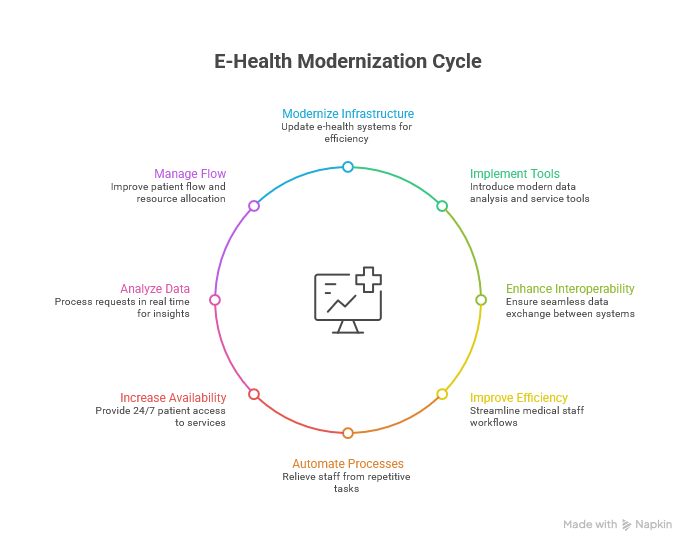
The primary goal of component D1.1.2 is to modernize e-health infrastructure and implement modern tools for data analysis and patient service. The program places strong emphasis on interoperability and improving the efficiency of medical staff.
By implementing modern medical voicebots, healthcare facilities fulfill key KPO objectives:
- Process automation: Relieving administrative staff from repetitive questions.
- Availability of e-services: Enabling patients to contact the facility 24/7.
- Data analysis: Processing requests in real time and improving patient flow management.
Funding opportunities for AI and communication automation
KPO funds are not limited to the purchase of servers or computers. The catalog of eligible costs includes broadly defined software and intelligent systems. Therefore, it is worth finding out relatively early where to obtain funding and how to meet the digitization requirements in 2026.
| Cost category | Example AI solution | Compliance with D1.1.2 |
| E-registration systems | Virtual receptionist (automated scheduling) | High |
| Patient service | AI voicebot for confirming and canceling appointments | High |
| Cybersecurity | Data encryption systems in voice cloud solutions | Critical |
| Data analytics | AI modules analyzing patient intent (NLP) | Medium / High |
Data security – a mandatory requirement under KPO
When applying for funding under D1.1.2, a key requirement is demonstrating that the implemented technologies meet the highest standards of information protection. In the case of AI voice systems, medical facilities must pay particular attention to data security in voicebots.
Compliance with GDPR and the National Interoperability Framework (KRI) forms the foundation on which EasyCall builds its implementations. As a result, the technical documentation of our solutions supports the grant settlement process, minimizing the risk of expense rejection.
Why is it worth investing in AI right now?
Managing patient traffic in large healthcare units is a logistical challenge. As demonstrated by our case study, the implementation of automation led to a tangible reduction in the number of unanswered calls at a hospital in Kraków. In the context of KPO, such an efficiency indicator serves as an ideal “milestone” for reporting project progress.Are you planning to modernize communication in your facility using KPO funds?

We will help you prepare the technical specification and select solutions that meet the digitalization requirements of 2026. Contact EasyCall experts today.
FAQ – The most common questions about KPO D1.1.2 and AI
Can a small primary care clinic (POZ) apply for funds for a voicebot under D1.1.2?
The main beneficiaries of this funding stream are hospitals and large healthcare entities. However, smaller facilities may use complementary programs (e.g., NFZ grants), which often have similar digitalization guidelines.
Is the cost of a subscription-based voicebot license eligible?
Yes, provided that the contract is structured in accordance with the call guidelines (e.g., a time-limited license for the duration of the project or a SaaS model with a prepaid period covering the project’s sustainability requirements).
What technical requirements must a medical bot meet to pass a KPO audit?
Above all, it must ensure full data security (encryption), offer integration capabilities with HIS/P1 systems, and have provider certification confirming service stability and availability.

